Massachusetts Delivery Gig Worker Classification Law
Delivery companies face a structural barrier proving drivers aren't employees.
Massachusetts starts from a position most delivery companies do not expect and are not built for: every worker is presumed to be an employee from the outset, and the burden sits entirely on the company to prove otherwise. That is a reversal of how most businesses think about the question. Elsewhere, a company drafts a contract, checks a few boxes, and then treats a worker as a contractor until someone can prove otherwise. In Massachusetts, the default runs the other way, and the paperwork a company wrote for itself carries no special weight until it clears a specific legal test. The mechanism for clearing that test is the ABC test: three conditions, and a company has to satisfy all three at once. For a delivery company running hundreds or thousands of drivers under independent-contractor agreements, that is the foundation the entire operating model sits on, and the next section explains why one piece of that foundation is particularly unstable for businesses whose entire product is moving things from one place to another.
What each prong of the ABC test requires and why Prong B is the structural problem for last-mile delivery
Prong A asks whether the worker is free from the company's direction and control, both in the contract and in actual day-to-day practice (draws on general ABC framework). That second part matters more than the first. A contract can say a driver has total discretion over routes and schedule, but if the operational reality looks like a dispatcher assigning stops and timing windows, the written agreement will not save the arrangement. Courts look at what actually happens on the ground, not what the document promised would happen.
The framework is the ABC test: three conditions, all of which must be satisfied simultaneously, and failing even one collapses the IC relationship into an employment relationship under the statute. The company has to show that the work performed falls outside its usual course of business, and for a company whose business is transporting goods, the people transporting goods are doing exactly the thing the business exists to do. Drivers have already filed suits making this argument directly: the claim that delivery work is core to the platform rather than incidental to it is being litigated now, not sitting as a hypothetical legal theory in a law review article. Compare that to a software company that hires a contract developer to build an internal tool unrelated to its product. That company can draw a clean line between what it sells and what the contractor built. A delivery company cannot draw that line, because the driver's work and the company's product are the same thing.
Two assumptions trip up operators who think they have covered this ground. A signed independent-contractor agreement does not satisfy any prong of the test on its own, and the Massachusetts Attorney General's Office has issued guidance rejecting contractual labels as proof of anything. Filing a 1099 with the IRS does not help either, since that is a federal tax reporting decision with no bearing on how Massachusetts law classifies the relationship.
A third workaround, requiring drivers to incorporate as an LLC before accepting work, has also failed to settle the question. In Martins v. Capstone Logistics, LLC, a January 2026 decision out of the District of Massachusetts, the driver operated through an LLC called Overcomer LLC, but the court's ruling addressed arbitration and venue, transferring the case to Delaware, and did not touch Prong B or the driver's underlying employment status. The case did not bless the LLC structure as a defense. It simply never reached the question. Any delivery company relying on driver-formed LLCs as a classification shield is relying on an argument tested against a default presumption of employment under Massachusetts General Laws, where every worker is legally an employee unless the hiring company affirmatively proves otherwise.
What misclassification costs a delivery company when a driver prevails
When a driver wins a misclassification claim, you do not get a lump-sum settlement calculated off some separate penalty schedule. The driver becomes entitled to the full set of protections an employee would have had under the Massachusetts Wage Act all along, applied retroactively. That includes overtime pay, minimum wage coverage for hours once treated as contractor work, and reimbursement for expenses the driver paid out of pocket, including insurance premiums. None of that is capped at a single driver's claim, since classification findings tend to apply to the operating model as a whole, not just the plaintiff in front of the judge.
The workers' compensation piece compounds the exposure further. Misclassification under the Massachusetts statute triggers workers' compensation obligations, so if a company never carried that coverage because it believed its drivers were contractors, it can be held retroactively liable for any workplace injury that occurred during the misclassification period. An insurance gap that looked like a cost savings on the way in becomes an open liability on the way out.
Courts have shown no appetite for treating the written agreement as determinative when the facts on the ground tell a different story. The contract functions as evidence of what the parties said they intended, not proof of what actually happened, and when those two things diverge, the actual working relationship wins.
Federal Relief and Massachusetts Exposure
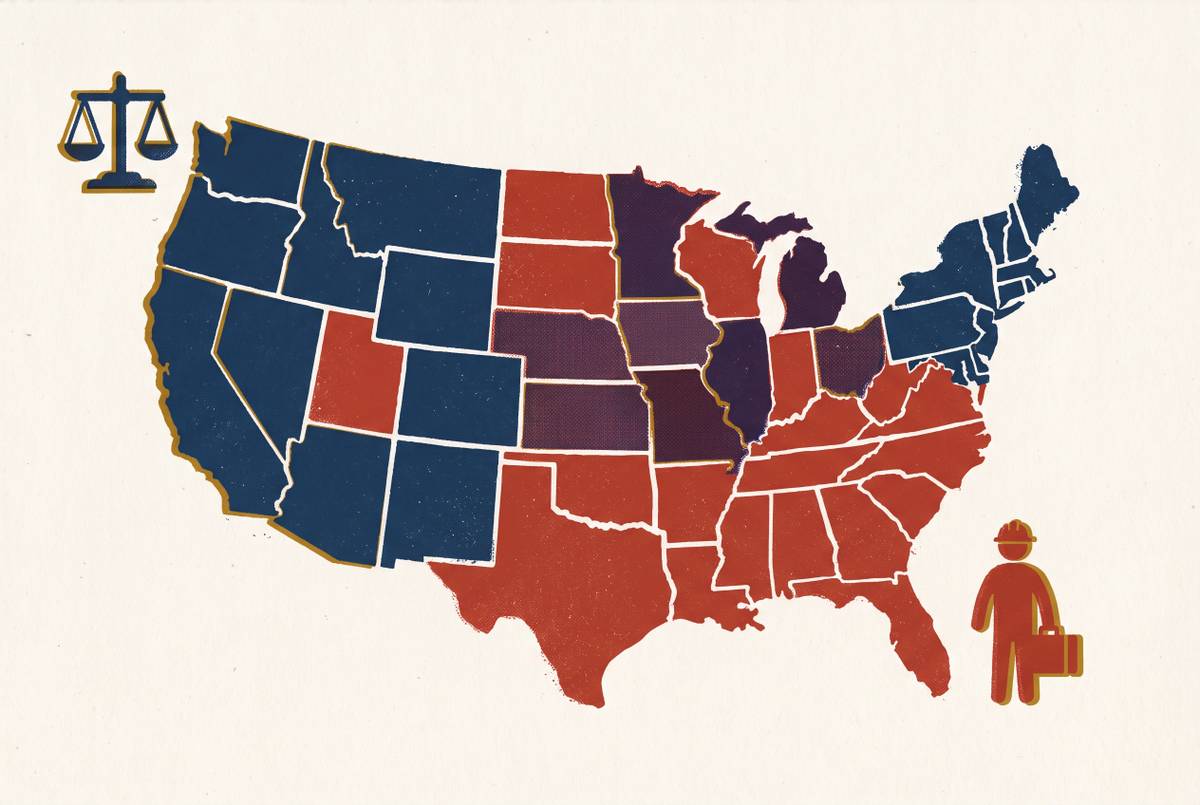
It has not been settled in Massachusetts, because federal and state classification law operate as two entirely separate systems, and satisfying one does not satisfy the other.
Under the 2026 federal framework, a driver who sets a personal schedule and drives a personally owned vehicle can look like a legitimate independent contractor by federal standards. Federal compliance and state compliance are not stacked on top of each other but run as parallel tracks, and clearing the federal bar does nothing to clear the Massachusetts one.
The real trap is this: you build a contracting structure around federal guidance but treat Massachusetts law as background noise. A company that spends its compliance budget on contracts while leaving Prong B unaddressed has built a structure that fails on the very point that the usual course of business is transporting goods, which for a delivery company means the work performed cannot be shown to fall outside it.
What documentation and operational structure give delivery companies defensible ground under each prong
Paperwork alone does not satisfy the ABC test. The test asks whether the actual day-to-day relationship reflects real independence across all three prongs at the same time, and a contract describing independence that the operation does not deliver will not hold up.
For Prong A, the relevant question is whether drivers have genuine discretion over how they do the work, not discretion that exists in a contract clause while a dispatch system quietly controls route order, timing, and sequence behind the scenes. When operational logs show drivers accepting, declining, and sequencing their own deliveries, they carry more weight in a dispute than contract language that grants a freedom nobody uses. Records of actual driver choices give a company something concrete to point to when a court asks what really happened, not what was written down.
For Prong B, documentation runs into its limits fast. Whether the company's actual business and the driver's actual work are separable in substance matters more than how a company describes its service in a contract, and that separation has to be built into how the company structures its services, not asserted after the fact. No amount of careful drafting turns a transportation company's drivers into work outside its usual course of business, because the work and the business are the same activity by definition. Documentation can support a Prong B argument only to the extent the underlying operating structure already supports it. Where a company's practice and its paperwork tell different stories, a court will decide the case on the practice.
The Insurance Gap and Misclassification Risk
Misclassification exposure and insurance exposure are the same problem, just viewed from two angles. If a misclassification finding succeeds, workers' compensation obligations apply retroactively, so a company has to cover injuries that happened before anyone decided its drivers should have had coverage all along.
The coverage gap exists on two fronts. The first is workers' compensation and disability coverage, which most gig delivery workers simply do not have, leaving both the driver and the company exposed if something goes wrong on a shift. The second is commercial auto coverage. Major delivery platforms generally offer limited or secondary coverage to their driver networks, with real gaps during waiting periods between deliveries, and some platforms, including Instacart and GrubHub, provide no coverage at all. Personal auto insurance often will not fill that gap either, since insurers can deny a claim outright once they determine the vehicle was being used for commercial delivery work at the time of the accident.
Usage-based insurance models are starting to close part of this gap more efficiently than flat commercial premiums, because platforms sit on data about miles driven, completed deliveries, and hours worked, so they can price risk more precisely than a blanket policy can. If a company runs an IC network at scale, buying occupational accident and commercial auto coverage in bulk, through a 1099 workforce operations platform like GigSafe, which automates insurance procurement and compliance monitoring across contractor networks for delivery businesses, compresses the per-contractor cost significantly compared to piecing it together driver by driver. That is not just a goodwill gesture toward drivers who otherwise go uncovered. Proactive coverage directly reduces the retroactive liability a company faces if a misclassification claim later succeeds, because injuries that already had coverage in place do not become new exposure the day a court reclassifies the workforce.
What H.1339 and the Competing Industry Bill Would Change
The legislative fight most worth tracking right now is House Bill H.1339, sponsored by Representative Andres X. Vargas of Haverhill. As of February 2, 2026, the bill cleared committee with a favorable report and moved to the House Committee on Ways and Means, a real procedural step rather than a symbolic gesture.
H.1339 would establish that many delivery drivers qualify as employees outright, require mileage reimbursement and wage standards, force companies to disclose driver pay, and set up a formal process for drivers to contest deactivation. Massachusetts AFL-CIO's Russo said the bill creates, for the first time, state regulations for delivery network companies. A rival bill, H.1108, backed by industry, is working its way through the same session, and the AFL-CIO has publicly labeled it a corporate-backed alternative to H.1339.
Neither outcome makes the work described in this piece optional. If H.1339 passes, covered drivers become employees and the ABC test disappears for them, but the cost and operational burden of running an employee workforce is heavier than managing contractor classification risk, not lighter. But if H.1108 passes instead, or some compromise version emerges, the ABC test framework stays exactly where it is, so every compliance obligation described in the prior sections stays the same. Delivery companies waiting to see which bill wins before investing in documentation, operational discipline, and insurance are waiting for permission to ignore a law that already applies to them today.
Question 3's Signal for Massachusetts and the Broader Gig Economy
Massachusetts voters approved Question 3 in November 2024, and it lets rideshare drivers stay independent contractors while they gain the right to bargain collectively, so it reclassifies no one as an employee but still gives drivers organized leverage. In late May 2026, the App Drivers Union became the first labor union in the country certified to represent rideshare drivers, reaching that certification through a streamlined card-check process rather than a formal election, and doing so at a statewide, sectoral level instead of negotiating platform by platform.
What stands out is how Uber and Lyft responded to the ballot measure. Neither company campaigned against Question 3, a sharp departure from the fight both waged against California's Proposition 22, and that restraint suggests the platforms may want a contractor-with-bargaining-rights model instead of being forced into full employee reclassification. Delivery companies watching the H.1339 negotiations should read that signal carefully. Question 3 may point toward a negotiated third option, where drivers keep contractor status and gain some form of organized voice, and the company never has to absorb the full cost structure of a converted employee workforce.
None of this is settled law yet. Littler's May 2026 analysis notes that the Massachusetts sectoral bargaining model raises significant legal questions that have not yet been tested in court, and how bargaining will actually play out remains an open question. Delivery companies have a narrow window to watch how that uncertainty resolves for rideshare before a similar structure gets proposed for last-mile delivery, where Prong B has already made the stakes of getting classification wrong considerably higher.
Sources
- Question 3 Still a Question: Massachusetts’ Experiment in Sectoral Bargaining for Gig Workers ✦ OnLabor
- Last-Mile Delivery Driver Employment Claims in Court
- Massachusetts Rideshare Drivers Sign Up for Unionization – And Spotlight Potential New State Law Labor Avenues | Littler
- Governor Healey, Labor Leaders Celebrate Establishment of First Rideshare Drivers’ Union in the Nation | Mass.gov
- Massachusetts law about independent contractors | Mass.gov
- Massachusetts Uber and Lyft drivers become first unionized gig workers in the U.S. - Axios Boston
- Lawmakers hear proposals to classify delivery app drivers as employees and add small delivery surcharge
- Independent Contractor Misclassification: Delivery Drivers - Massachusetts Wage Law